
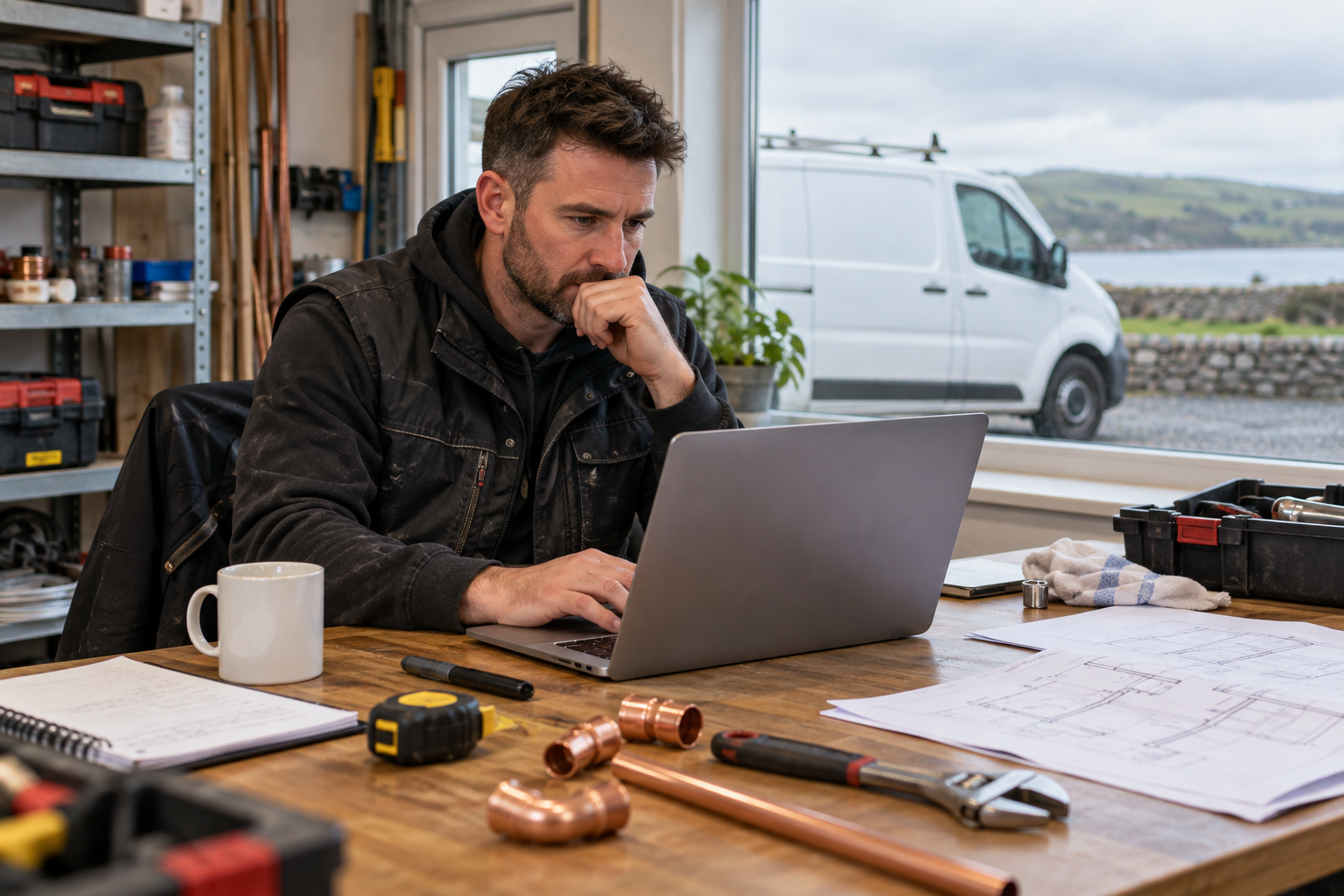
Local SEO for tradespeople in Ireland helps plumbers, electricians, and other service businesses connect with customers searching within their working area. The objective is suitable enquiries, not simply more visitors from places you cannot serve.
A homeowner in Dublin, Cork, or Galway needs practical answers: do you provide the required service, cover their location, and offer a clear way to contact you? Sparknetics' SEO and search visibility services help businesses improve those foundations.
1. Decide which jobs and areas matter
List the jobs you actually undertake, including any limits on availability or travel. A plumber focusing on planned bathroom work has different priorities from a business offering urgent callouts.
Choose service areas based on real travel arrangements and customer patterns. Do not promise countywide coverage when you can reliably serve only part of it.
Use website and enquiry data to review demand. Validate priorities first.
2. Set up the right Business Profile
Many tradespeople visit customers rather than receiving them at a shopfront. Google's service-area guidance distinguishes these businesses from storefront and hybrid models.
If customers do not visit your address, follow the guidance for hiding it and showing genuine service areas. Do not create virtual locations simply to appear in more towns.
Use your actual business name, accurate categories, phone number, website, and working hours. Explain callout arrangements truthfully. A Google Business Profile should represent the business you operate, including how customers can contact you.
3. Give major services their own useful pages
A general list of services rarely answers enough questions. Explain important work on dedicated pages: what the service includes, the areas covered, and how enquiries are assessed.
For planned installation work, explain the quotation process and what details help you prepare. For callouts, state when the business accepts enquiries and avoid unsupported arrival-time promises.
List qualifications or professional registrations only when genuine and current. Never invent accreditations to strengthen an SEO page. Clear expectations help customers judge suitability and reduce enquiries for jobs outside your scope.
4. Build location pages with real value
Location pages should explain genuine coverage and practical arrangements. Include relevant project examples, travel considerations, service availability, and contact options where accurate.
Avoid copying the same paragraph across twenty town pages. A Dublin service page and a Galway page need real reasons to exist, rather than different place names alone.
If you work from one base, do not imply branches in every area you cover. Google's local ranking guidance includes distance alongside relevance and prominence. Service-area settings cannot remove geography from local results.
5. Make mobile enquiries easy

Customers often compare providers on their phones. Show a tap-to-call number, clear enquiry options, and the areas served near relevant service information.
Keep quotation forms short. Ask for enough context to assess the work without forcing visitors through unnecessary fields. Explain whether the form requests a callback, quotation, or confirmed booking.
Test forms on a real phone and confirm messages reach the right person. Sparknetics' website and conversion services support businesses where unclear navigation or difficult forms lose suitable enquiries.
6. Show genuine work and customer feedback
Use real project photographs with permission, explaining the work accurately. Protect customer identities, home addresses, and other private details.
Ask for honest reviews after completed jobs. Google's review policies prohibit incentivized feedback and selective positive solicitation. Do not reward customers for favourable ratings.
Respond professionally, including when a complaint needs investigation. Review recurring questions about quotations, punctuality, communication, and cleanup. These can guide service improvements and useful website content. Trust comes from accurate evidence and consistent delivery, not unsupported “best in Ireland” claims.
7. Answer questions before customers enquire
Helpful articles can explain your quotation process, what information to include in an enquiry, how to check coverage, and the differences between services you offer.
Use questions your team actually receives. Google's helpful content guidance prioritizes information created for readers. Do not publish technical safety instructions merely to attract traffic.
Link each answer to the appropriate service or contact page. This gives readers a relevant next step. An article about arranging a quotation should help someone prepare an enquiry instead of ending with an unrelated sales message.
8. Fix website issues and track suitable leads
Check broken links, accidental indexing restrictions, mobile usability, HTTPS, and important pages' search visibility. Keep contact information consistent across reputable listings.
Track qualified calls, quotation requests, booked work, and the areas enquiries come from. A phone-button click is not proof of a completed call, and a quotation request is not a booked job.
Use those differences in reports. If enquiries mostly come from outside your coverage, review location messaging and page targeting. If suitable visitors rarely contact you, check the form, service explanations, and trust information before adding more content.
Frequently asked questions
What is local SEO for tradespeople in Ireland?
It helps a trade business communicate its services and working area through its website, business profiles, and useful content, supporting relevant local enquiries.
Should a plumber display a home address on Google?
If customers do not visit the address, follow Google's service-area business guidance rather than presenting it as a customer-facing storefront.
Can I target several Irish towns?
Yes, when you genuinely serve them. Explain accurate coverage and create useful pages; do not invent branches or duplicate pages solely to swap town names.
Are FAQs enough to rank a trade website?
No. FAQs complement accurate business information, useful service pages, technical accessibility, reputation, and appropriate local relevance. They are not a substitute for those foundations.
How can I tell whether SEO brings useful work?
Compare relevant enquiries, quotation requests, and booked jobs against your baseline. Track job types and customer locations where reliable information is available.
Turn visibility into a clearer enquiry journey
Sparknetics supports businesses in Ireland with search visibility and wider digital marketing. Focus on genuine coverage, clear services, and easy contact options. Request a complimentary digital presence audit to identify the improvements that fit your trade business.